What semi-open means in the developer’s description
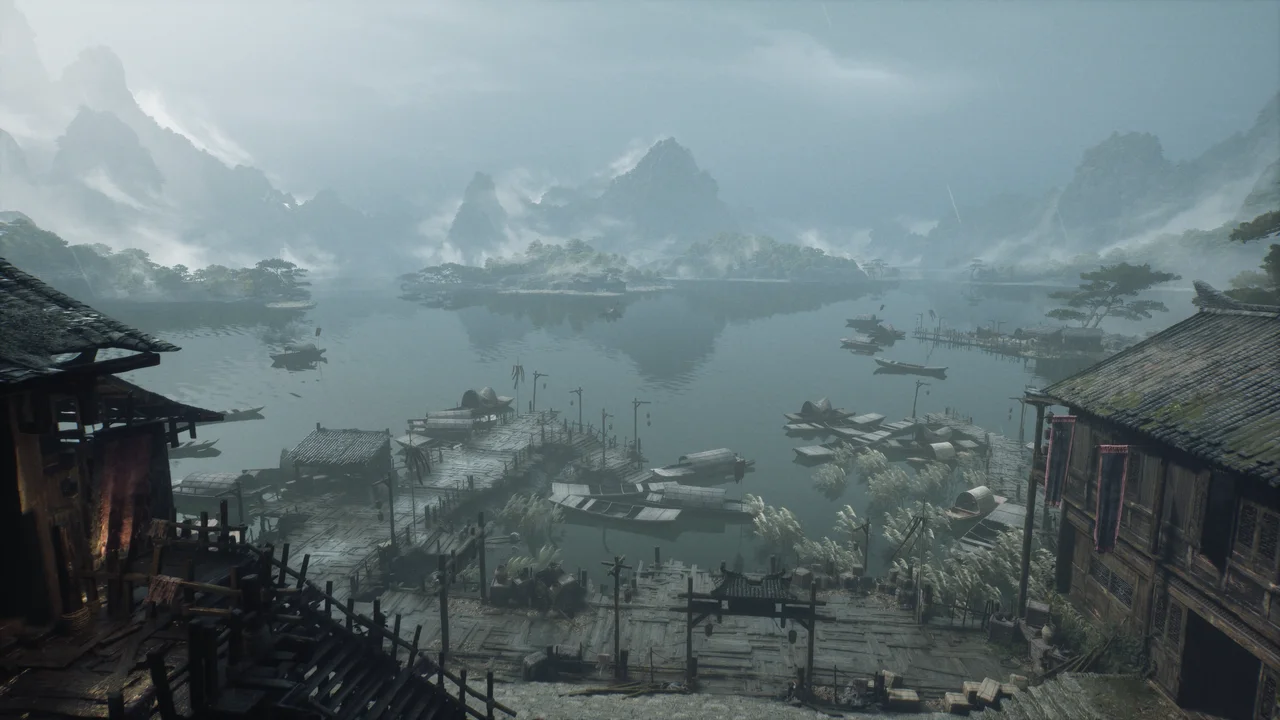
The original PlayStation Blog introduction explicitly describes Phantom Blade Zero as semi-open. S-GAME explains that it chose several reasonably sized handcrafted maps rather than one huge continuous landscape filled with reused assets. That is the clearest foundation for answering the open-world question.
The term describes a balance between authored progression and places to investigate. It gives a reason to expect exploration without promising the unrestricted movement associated with a conventional sandbox. When comparing the game with another action RPG, start with that structure instead of treating every game with optional paths as the same kind of open world.
The map presentation reflects a connected adventure
PC Gamer’s coverage of the official presentation describes eight hand-painted Chinese ink-wash maps. The developer’s framing distinguishes the adventure from both an open-world game and a wholly linear experience. Together, those details explain how map identity and connected exploration are central to the presentation.
The important point is the structure, rather than a guessed measurement of physical size. A count of maps does not reveal how long every route takes or how freely each place can be reached at the start. It is useful context for understanding the world’s organization, without becoming a promise of unrestricted access to every location.
What the early hands-on session found
Push Square’s extended preview describes early areas with optional exploration and reasons to revisit locations. The reviewer discusses backtracking for quest items and objectives within the portion played. That provides a practical view of how authored progress and optional activity can coexist in the opening.
The same report is careful about the limits of the session. Early-region observations do not automatically describe every later area, so they should remain a view of the previewed material. Read them as an example of the structure already described by the developer, rather than a complete survey of the finished world.
Why a Steam tag is not the whole answer
Steam displays user-assigned tags alongside a product’s own description. A broad open-world label can help people discover a game, but it does not replace the studio’s specific explanation of its map design. The developer’s semi-open description is the more precise answer to the question about structure.
The distinction is especially useful for players deciding what kind of freedom they want. If your interest is in searching handcrafted areas and finding passages, the official description supports that expectation. If you are comparing unrestricted sandbox exploration, the semi-open framing gives a clearer basis for the comparison than a single discovery tag.
Exploration and combat belong to the same journey
The game’s weapons and progression are presented alongside its world, rather than as an isolated sequence of fights. The official deep dive describes exploring the Wulin, expanding the arsenal, and using accessories and upgrades to create a preferred approach. That places discoveries and combat preparation within the same adventure.
The director’s playtime discussion also emphasizes a dense experience instead of empty travel or repetitive grinding. Those statements explain the design direction without giving an exact amount of exploration time. Read the length and weapons guides together with this article if you want to understand how the world supports the wider action RPG.
Soul, the Wulin, and kungfupunk
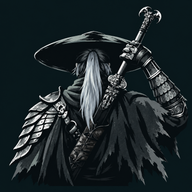
Phantom Blade Zero follows Soul, a swordsman framed for his master’s murder and left with a badly wounded heart. He moves through the Wulin while trying to uncover the conspiracy behind his situation. The official premise gives him sixty-six days left to live, making urgency and betrayal central to the story rather than simply a backdrop for isolated fights.
S-GAME calls the game’s visual identity kungfupunk, combining wuxia influences with machinery and punk fantasy. The official introduction connects its cinematic martial-arts ambition with the earlier Rainblood project and the wider Phantom Blade franchise. These details help explain why the game’s weapons, environments, and characters share a strong martial-arts identity even when the setting moves beyond historical realism.
The weapon systems behind the action
The August developer deep dive describes more than 30 main weapons and 25 secondary weapons called Phantom Edges. These are separate parts of the arsenal, so a description of the main weapons alone does not cover everything Soul can use. Official storefront descriptions support the same broad scale, although their shorter summaries use less specific wording for the secondary weapons.
S-GAME also explains that weapons can be upgraded and paired with accessories to shape a build. Reforging returns upgrade materials, allowing them to be invested in another weapon when a player wants to change approach. That makes experimentation a confirmed part of progression, without requiring a speculative damage chart or a claim that one weapon is always the strongest choice.
Difficulty options and repeat play
The developer confirms difficulty options for different levels of experience, including Wayfarer for players primarily interested in the story. Hellwalker is described as a tougher challenge with more advanced, adaptive enemy intelligence. These descriptions establish that the game offers a choice of challenge rather than asking every player to use the same difficulty.
The October developer Q&A explains that Sixty-Six Days is a separate challenge unlocked in New Game Plus. It uses Hellwalker difficulty with a limit of 66 deaths, while Soul’s limited remaining life is a narrative element during the ordinary first run. The distinction matters when planning a playthrough, because the story premise does not automatically impose that limited-lives rule on a new player.
The current launch date and regional difference
The current announced release date is October 29, 2026, replacing the earlier September 9 date. S-GAME’s creative director set out that change in a June letter, and subsequent official announcements use the later date. The August PlayStation Blog recap adds that the release falls on October 28 in the US and select regions.
That regional note explains why an American store listing can show the previous calendar day without contradicting the worldwide announcement. Use the store for the platform and region where you intend to play when checking the date attached to your purchase. An older trailer remains useful historical media, but its original date should not replace the updated announcement when planning launch day.
Sources and further reading
- S-GAME introduction · PlayStation Blog
- PC Gamer exploration coverage
- Official Steam listing
- Push Square hands-on preview
- S-GAME gameplay deep dive · PlayStation Blog
- Wccftech developer interview
- Official PlayStation game page
- Official Epic Games Store listing
- RPGamer developer Q&A
- S-GAME creative-director letter