
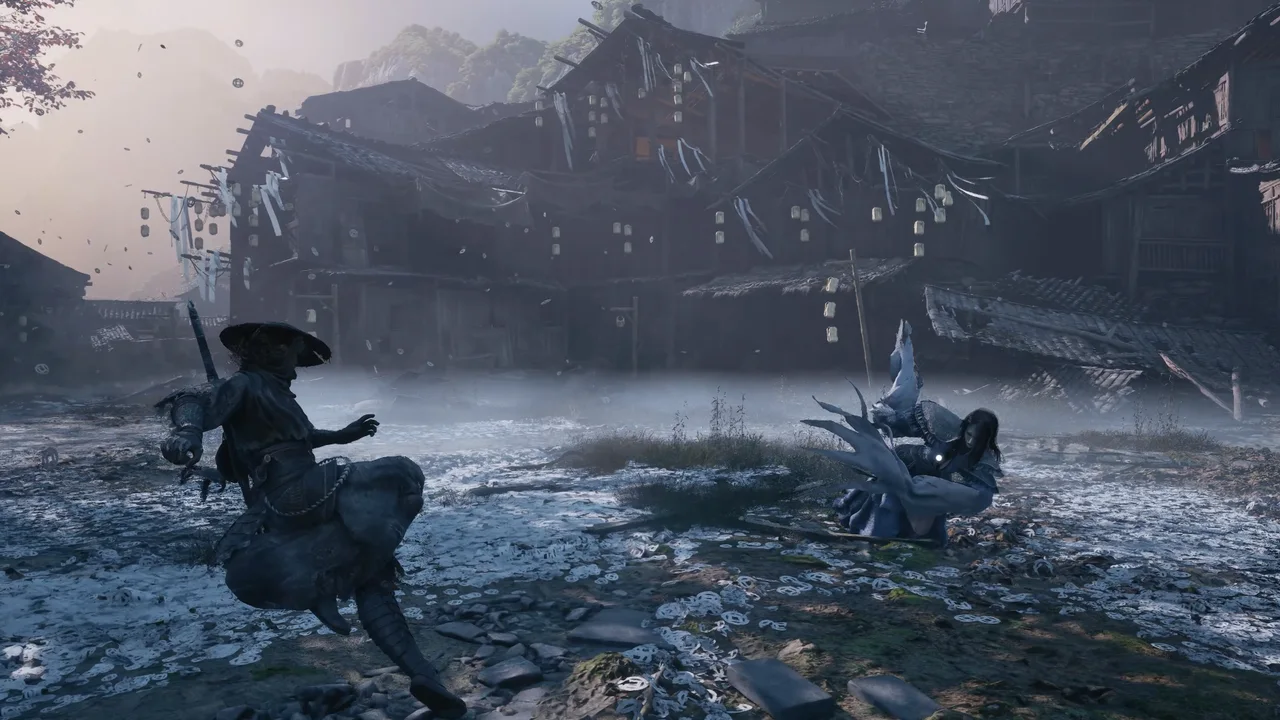
PS5 is an announced launch platform
S-GAME includes PS5 in its official pre-order announcement. PlayStation also hosts a dedicated product page with the game overview, media, features, and purchase options. Together, those sources establish the console version directly rather than through a third-party prediction.
For a console player, the product page is the practical place to begin comparing editions. It identifies the platform attached to the purchase and provides the official description of the experience. Keep that specific PS5 listing distinct from a PC store page, since the PC hardware requirements describe a separate version and setup.
Adaptive triggers and haptic feedback
PlayStation describes adaptive triggers as part of using Phantom Edges. Its examples connect trigger resistance with the tension of a bowstring and a charging cannon. The same feature overview describes haptic feedback as a way to convey impacts during combat.
These are named controller features of the advertised PS5 experience. They help explain how the console presentation relates to the game’s weapon identity without establishing a different combat system from other platforms. Use the official descriptions when judging the appeal of the controller implementation, rather than assuming a feature guarantees a particular personal preference.
Tempest 3D audio and spatial awareness
The official page lists Tempest 3D AudioTech among the PS5 features. It describes spatial audio as helping identify threats through sound in the game’s world. The page also notes that the supported speaker or headphone setup needs to be configured appropriately.
That makes audio a platform feature to consider alongside the visual presentation and controller feedback. It is not the same question as the number of story hours or the difficulty of a boss. Separating these details helps you compare what the PS5 version advertises without assigning an unsupported numerical advantage to the hardware feature.
What PS5 Pro Enhanced establishes
The PlayStation product page carries the PS5 Pro Enhanced label. That confirms the version is advertised with PS5 Pro enhancement support. It should be read as the listed platform feature, with the source kept separate from any personal claim to have tested the console.
The label alone is not a measurement of every graphics mode or encounter. The collected material supports identifying the enhancement, while detailed performance judgments require the version and hardware to be tested directly. Our review-status guide explains the scope of existing hands-on coverage so preview enthusiasm is not mistaken for a full console benchmark.
Compare the two digital software editions
The US PlayStation listing shows Standard at $59.99 and Digital Deluxe at $69.99. The Deluxe contents add Wulin Legend and Blood-Steel Form appearances, a digital artbook, and a digital soundtrack. Those are the named additions to evaluate if the larger package interests you.
Pre-order early unlocks are described separately from those Deluxe extras. The official information says Treasure Basin and Legacy can also be earned through game progression. This distinction makes it easier to compare the software packages without treating the presence of a pre-order bonus as evidence of a different story campaign.
Difficulty and the first PS5 playthrough
PlayStation’s accessibility information confirms an alternative preset that reduces the overall challenge. The developer’s deep dive identifies Wayfarer as the story-focused option and Hellwalker as a tougher adaptive challenge. These statements establish that the combat has selectable difficulty rather than one mandatory level of challenge.
The Sixty-Six Days rule belongs to a separate repeat-play mode according to the October developer Q&A. It should not be confused with the narrative urgency of Soul’s first journey. Read the difficulty guide before choosing your preferred approach, and use the platform store separately for purchase and regional launch details.
The current launch date and regional difference
The current announced release date is October 29, 2026, replacing the earlier September 9 date. S-GAME’s creative director set out that change in a June letter, and subsequent official announcements use the later date. The August PlayStation Blog recap adds that the release falls on October 28 in the US and select regions.
That regional note explains why an American store listing can show the previous calendar day without contradicting the worldwide announcement. Use the store for the platform and region where you intend to play when checking the date attached to your purchase. An older trailer remains useful historical media, but its original date should not replace the updated announcement when planning launch day.
The weapon systems behind the action
The August developer deep dive describes more than 30 main weapons and 25 secondary weapons called Phantom Edges. These are separate parts of the arsenal, so a description of the main weapons alone does not cover everything Soul can use. Official storefront descriptions support the same broad scale, although their shorter summaries use less specific wording for the secondary weapons.
S-GAME also explains that weapons can be upgraded and paired with accessories to shape a build. Reforging returns upgrade materials, allowing them to be invested in another weapon when a player wants to change approach. That makes experimentation a confirmed part of progression, without requiring a speculative damage chart or a claim that one weapon is always the strongest choice.
Soul, the Wulin, and kungfupunk
Phantom Blade Zero follows Soul, a swordsman framed for his master’s murder and left with a badly wounded heart. He moves through the Wulin while trying to uncover the conspiracy behind his situation. The official premise gives him sixty-six days left to live, making urgency and betrayal central to the story rather than simply a backdrop for isolated fights.
S-GAME calls the game’s visual identity kungfupunk, combining wuxia influences with machinery and punk fantasy. The official introduction connects its cinematic martial-arts ambition with the earlier Rainblood project and the wider Phantom Blade franchise. These details help explain why the game’s weapons, environments, and characters share a strong martial-arts identity even when the setting moves beyond historical realism.
How exploration fits around the fights
S-GAME describes Phantom Blade Zero as a semi-open adventure with handcrafted areas, rather than one huge unrestricted landscape. Its original introduction explains that the studio chose reasonably sized maps populated with activities instead of filling a continuous world with reused assets. The official store description also points to hidden passages and mechanisms, giving exploration a purpose beyond moving between encounters.
For a player, this means the world structure belongs alongside the combat when deciding what kind of experience to expect. Optional routes and discoveries are part of the advertised adventure, while the developer’s description stops short of promising sandbox freedom. Our open-world guide explains this structure in more detail and keeps the distinction between an interconnected environment and a conventional open world clear.
Sources and further reading
- S-GAME pre-order announcement
- Official PlayStation game page
- PlayStation Universe hands-on preview
- PlayStation Store edition details
- S-GAME official website
- S-GAME gameplay deep dive · PlayStation Blog
- RPGamer developer Q&A
- S-GAME creative-director letter
- Official Epic Games Store listing
- S-GAME introduction · PlayStation Blog
- Official Steam listing