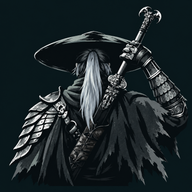
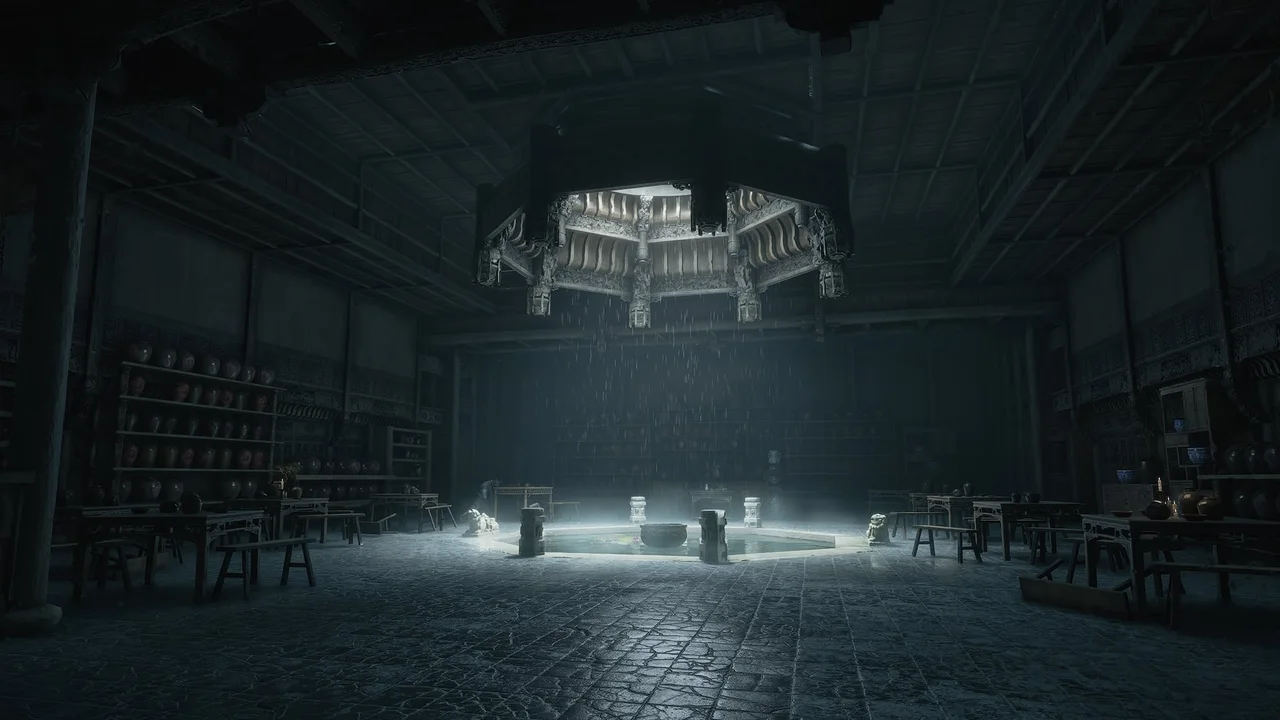
Two official PC storefronts
The developer’s pre-order announcement links Steam and Epic Games Store. Both destinations list Phantom Blade Zero as a PC purchase, giving players two confirmed store choices. The official links are a useful way to identify the right product instead of relying on an unrelated search listing.
Store choice and edition choice are separate decisions. First confirm the PC platform and the account where you want the game, then compare the Standard and Digital Deluxe descriptions. That sequence keeps hardware compatibility, product identity, and the value of digital extras clear when evaluating the available offers.
The baseline Windows requirements
The official specification sheet lists Windows 10 or 11 in a 64-bit version, DirectX 12, and 16 GB of memory. It requires an SSD for both the minimum and recommended configurations. These are the shared baseline conditions before comparing the processor and graphics card.
Matching one component is not the same as matching the published tier. Read the processor, GPU, memory, operating system, and storage requirements together when comparing your computer. The full requirements guide places them in a side-by-side table so the minimum and recommended configurations can be checked without mixing parts of the two lists.
Minimum CPU and graphics tier
The minimum processor choices are an Intel Core i7-8700K or AMD Ryzen 5 3600. The matching GPU options are an NVIDIA GeForce GTX 1660 with 6GB or AMD Radeon RX 5500 XT with 8GB. The developer associates that tier with 1080p at 30 FPS using upscaling.
The upscaling condition belongs next to the target because it describes the published setup. It should not be silently converted into a native-resolution performance claim. Use the minimum list as the developer’s reference configuration, keeping it distinct from an independent test of your own particular combination of hardware and settings.
Recommended CPU and graphics tier
The recommended processor choices are an Intel Core i5-10600K or AMD Ryzen 5 5600X. The listed graphics options are an RTX 3060 Ti with 8GB or Radeon RX 6700 XT with 12GB. That configuration is paired with a 1440p, 60 FPS target using upscaling.
The recommended tier still uses the same published memory and SSD baseline. Its higher graphics target is therefore one part of a complete configuration rather than a reason to overlook the rest of the system. Read the named tier as guidance for the intended setup, while reserving final performance conclusions for direct measurements.
Ray tracing is a separate comparison
S-GAME’s requirements announcement includes a separate ray-tracing recommendation. It names an RTX 5060 8GB for 1080p at 60 FPS with upscaling, and an RTX 5080 16GB for path tracing at 2160p and 60 FPS with upscaling. These are additional published graphics targets, not substitutes for reading the baseline requirements.
The distinction matters if lighting features are important to your purchase decision. Compare the particular rendering feature and resolution attached to each target rather than treating all GPU recommendations as interchangeable. Our requirements article keeps those targets separate so ordinary recommended settings are not confused with the more demanding published rendering options.
Know what a PC listing tells you
The store pages establish the PC product, the available software editions, and the advertised requirements. They also provide the developer’s description of the single-player adventure. That information helps with purchase planning but serves a different role from a reviewer’s account of a preview session.
The collected October coverage includes hands-on impressions rather than a complete public-review consensus. Use those observations to understand the authors’ experiences, with their limited scope kept visible. The PC specifications and preview impressions are most useful together when the distinction between a target configuration and an observed result remains clear.
The current launch date and regional difference
The current announced release date is October 29, 2026, replacing the earlier September 9 date. S-GAME’s creative director set out that change in a June letter, and subsequent official announcements use the later date. The August PlayStation Blog recap adds that the release falls on October 28 in the US and select regions.
That regional note explains why an American store listing can show the previous calendar day without contradicting the worldwide announcement. Use the store for the platform and region where you intend to play when checking the date attached to your purchase. An older trailer remains useful historical media, but its original date should not replace the updated announcement when planning launch day.
Standard and Digital Deluxe compared
The checked US storefronts list Standard at $59.99 and Digital Deluxe at $69.99. Standard supplies the game, while the advertised Deluxe package adds the Wulin Legend and Blood-Steel Form appearances, a digital artbook, and a digital soundtrack. These are the listed differences to compare when choosing between the two software editions.
Pre-order bonuses are a separate part of that purchase decision, rather than another name for the Deluxe extras. The developer lists early unlocks for Treasure Basin and the Legacy appearance, and says those pre-order items can also be obtained through progression. Check the edition and currency on the final storefront before paying, since a US list price describes that market rather than every regional checkout.
The weapon systems behind the action
The August developer deep dive describes more than 30 main weapons and 25 secondary weapons called Phantom Edges. These are separate parts of the arsenal, so a description of the main weapons alone does not cover everything Soul can use. Official storefront descriptions support the same broad scale, although their shorter summaries use less specific wording for the secondary weapons.
S-GAME also explains that weapons can be upgraded and paired with accessories to shape a build. Reforging returns upgrade materials, allowing them to be invested in another weapon when a player wants to change approach. That makes experimentation a confirmed part of progression, without requiring a speculative damage chart or a claim that one weapon is always the strongest choice.
How exploration fits around the fights
S-GAME describes Phantom Blade Zero as a semi-open adventure with handcrafted areas, rather than one huge unrestricted landscape. Its original introduction explains that the studio chose reasonably sized maps populated with activities instead of filling a continuous world with reused assets. The official store description also points to hidden passages and mechanisms, giving exploration a purpose beyond moving between encounters.
For a player, this means the world structure belongs alongside the combat when deciding what kind of experience to expect. Optional routes and discoveries are part of the advertised adventure, while the developer’s description stops short of promising sandbox freedom. Our open-world guide explains this structure in more detail and keeps the distinction between an interconnected environment and a conventional open world clear.
Sources and further reading
- S-GAME pre-order announcement
- Official Steam listing
- Official Epic Games Store listing
- S-GAME PC requirements
- Push Square hands-on preview
- PlayStation Universe hands-on preview
- S-GAME creative-director letter
- S-GAME gameplay deep dive · PlayStation Blog
- PlayStation Store edition details
- S-GAME official website
- S-GAME introduction · PlayStation Blog