
Identify the correct Steam product
The app number 4115450 identifies the official Phantom Blade Zero product collected for this guide. S-GAME’s own announcement links the same Steam destination alongside PS5 and Epic Games Store. That direct connection is the clearest way to distinguish the game from another product with a similar name.
When following a search result, compare the product title and developer rather than relying on a headline alone. The checked listing names S-GAME Studio as developer and S-GAME Publishing as publisher. Using the official destination keeps the edition, platform, and store offer attached to the game you intended to find.
Pre-purchase is different from a released download
The checked Steam page offers pre-purchase for the full game. That describes buying ahead of the listed release, rather than establishing a public playable demo. The distinction is useful when a search for gameplay leads to a store that currently offers a purchase but no trial download.
The official announcement confirms that pre-orders are open on the supported stores. It does not turn every trailer or event demonstration into software available through Steam. Our demo guide answers the download question separately, so a player looking to try the game can distinguish that goal from reserving a full-game copy.
Standard and Digital Deluxe on Steam
The checked US Steam listing shows $59.99 for Standard and $69.99 for Digital Deluxe. Those amounts match the US pricing shown in the other collected official storefronts. Compare them in the currency displayed for your own account before deciding between the packages.
The Deluxe offer is described through named digital extras rather than a different platform version. Its advertised contents include two appearances, a digital artbook, and a digital soundtrack alongside the game. Read the Deluxe guide for the contents comparison and keep the pre-order early unlocks separate from the extras that define the edition.
Why the listing shows October 28
Steam’s checked release display uses October 28, 2026. The developer’s current global announcement uses October 29, while the PlayStation Blog footnote explains October 28 for the US and select regions. These sources provide the context for the calendar difference.
That means the Steam display does not need to be treated as evidence of a separate delay or a different game. A region-specific date and a worldwide headline can describe the same announced launch. Use the store page associated with your account when planning around the displayed day, and read the release guide for the chronology of the date change.
Read the Steam requirements as complete tiers
The Steam page publishes minimum and recommended PC specifications. Both call for 16 GB RAM, DirectX 12, a 64-bit operating system, and SSD installation. The processor and graphics choices differ between the two configurations, so the tier needs to be read as a complete set.
The performance notes also state that the published targets use upscaling. Minimum targets 1080p at 30 FPS, while recommended targets 1440p at 60 FPS. Our specification guide lays out those conditions together, avoiding the misleading impression that a target resolution is an independently measured result for every computer.
User reviews and store descriptions answer different questions
The checked listing has no user reviews at the research date. Its game description and product details still establish the advertised features, purchase options, and developer identity. Those roles should remain separate from the evaluation a review would provide after someone plays the released version.
For impressions before launch, the collected sources include attributed hands-on previews. They can describe the authors’ sessions without supplying a Steam user score. Our review-status article separates that coverage from final verdicts, so a reader can find useful observations without being shown a rating that the checked store does not contain.
PC hardware to check before buying
The published PC requirements call for Windows 10 or 11 in a 64-bit version, DirectX 12, 16 GB of memory, and an SSD. The minimum graphics tier lists a GTX 1660 6GB or Radeon RX 5500 XT 8GB, while the recommended tier lists an RTX 3060 Ti 8GB or RX 6700 XT 12GB. Those tiers give a practical starting point for comparing the PC version with hardware you already own.
The associated targets use upscaling: 1080p at 30 FPS for minimum and 1440p at 60 FPS for recommended. They are published configuration targets, rather than independent measurements of every encounter in the finished game. Read the dedicated requirements table for the matching processors and the separate ray-tracing guidance before treating a graphics-card match as a complete compatibility check.
What the pre-order bonuses mean
The official purchase information describes Treasure Basin and the Legacy appearance as early unlocks. It explicitly says that both can also be obtained through in-game progression, so pre-ordering changes when those items are available to you. That is the useful distinction to retain when comparing a pre-order with purchasing the game later.
An early item unlock and an earlier start to the game are different purchase benefits. The advertised item description should be read on its own terms, with the launch date checked separately on the store. If the artbook, soundtrack, or named Deluxe appearances are what interest you, compare the Digital Deluxe contents instead of assuming that every bonus belongs to the same offer.
How exploration fits around the fights
S-GAME describes Phantom Blade Zero as a semi-open adventure with handcrafted areas, rather than one huge unrestricted landscape. Its original introduction explains that the studio chose reasonably sized maps populated with activities instead of filling a continuous world with reused assets. The official store description also points to hidden passages and mechanisms, giving exploration a purpose beyond moving between encounters.
For a player, this means the world structure belongs alongside the combat when deciding what kind of experience to expect. Optional routes and discoveries are part of the advertised adventure, while the developer’s description stops short of promising sandbox freedom. Our open-world guide explains this structure in more detail and keeps the distinction between an interconnected environment and a conventional open world clear.
Soul, the Wulin, and kungfupunk
Phantom Blade Zero follows Soul, a swordsman framed for his master’s murder and left with a badly wounded heart. He moves through the Wulin while trying to uncover the conspiracy behind his situation. The official premise gives him sixty-six days left to live, making urgency and betrayal central to the story rather than simply a backdrop for isolated fights.
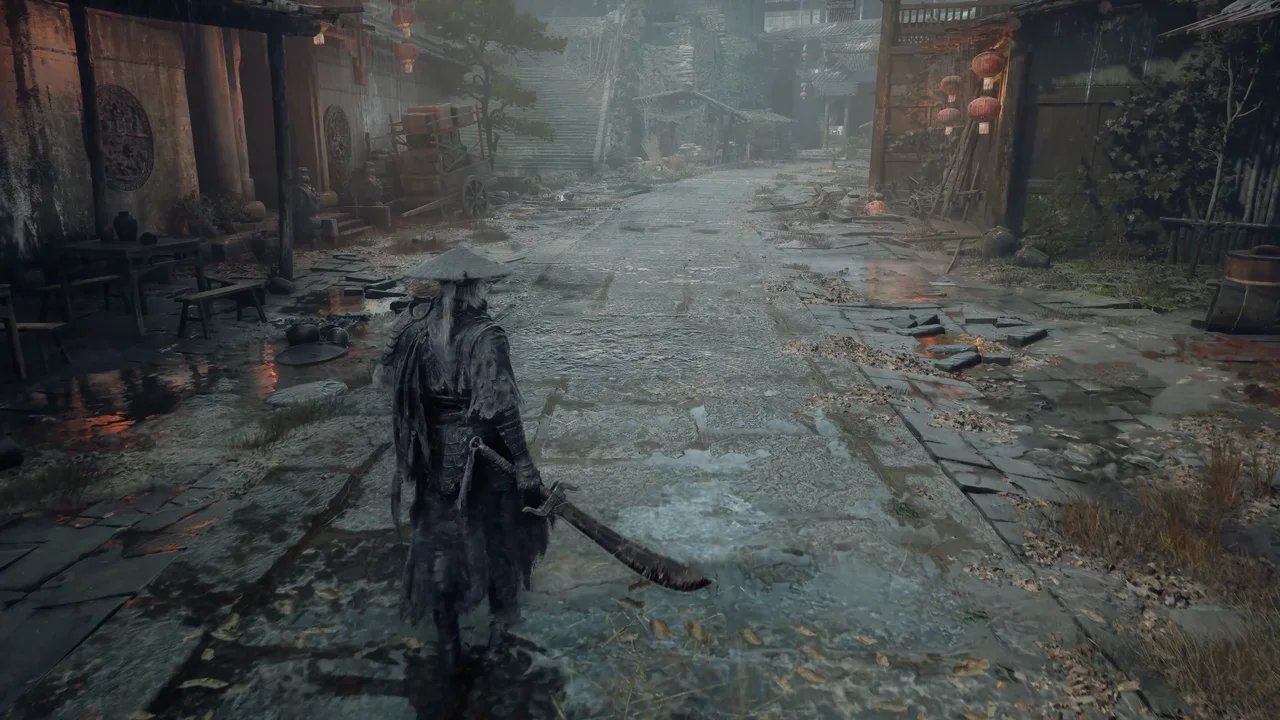
S-GAME calls the game’s visual identity kungfupunk, combining wuxia influences with machinery and punk fantasy. The official introduction connects its cinematic martial-arts ambition with the earlier Rainblood project and the wider Phantom Blade franchise. These details help explain why the game’s weapons, environments, and characters share a strong martial-arts identity even when the setting moves beyond historical realism.
Sources and further reading
- Official Steam listing
- S-GAME pre-order announcement
- Official Epic Games Store listing
- PlayStation Store edition details
- S-GAME gameplay deep dive · PlayStation Blog
- S-GAME creative-director letter
- S-GAME PC requirements
- Push Square hands-on preview
- PlayStation Universe hands-on preview
- S-GAME official website
- S-GAME introduction · PlayStation Blog
- Official PlayStation game page